
Venezuela places: choosing the right destinations for your trip
Choosing among Venezuela places can feel difficult because the country combines spectacular natural scenery with travel conditions that may change quickly. Angel Falls, white-sand islands in Los Roques, Andean mountain towns, coral coastlines, and Saharan-style dunes all offer distinct experiences, but they are not equally easy to reach or suit every traveler. The best destination depends on how much time you have, which regions are currently accessible, whether you prefer wildlife, mountains, beaches, or photography, and how much flexibility you can accept if transport or lodging plans need to change.
This guide compares the most useful Venezuela places for an independent traveler, organized by landscape, access demands, and the kind of experience each destination offers. It also explains how to build a realistic route, what to confirm before booking international transportation, and which practical questions to ask locally. It is a planning guide rather than a promise that every attraction or service will operate normally on a particular date. Current entry rules, travel advisories, road conditions, and local arrangements should always be checked before departure.
Compare the best Venezuela places before choosing a route
Venezuela is large, and distance matters more here than in many compact destinations. A beach holiday, an expedition into Canaima National Park, and a circuit through the Andes each require a different amount of time and logistical support. Rather than collecting a long list and choosing the most beautiful photograph, compare destinations by the effort required to reach them and the conditions you can reasonably manage.
The table below focuses on stable geographic characteristics rather than temporary opening hours, ticket prices, or transport schedules, which can vary. It is designed to help you identify the regions that suit your preferred pace before making detailed reservations.
| Destination | Main appeal | Best for | Planning reality |
|---|---|---|---|
| Angel Falls and Canaima | Remote tepuis, rivers, waterfalls, and rainforest journeys | First-time visitors seeking Venezuela’s signature landscape | Allow several days, use a reputable local operator, and expect limited connectivity outside the main hubs |
| Los Roques | Granite islands, clear water, snorkeling, diving, and boat excursions | Beach travelers, divers, and photographers | Most visitor activity depends on boats and weather; arrange arrival and departure before committing to a tight mainland itinerary |
| Morrocoy National Park | Mangroves, calm lagoons, reefs, and coastal wildlife | Nature lovers wanting scenery without an island-resort format | Good as a focused road trip from the northwest, with transport and park arrangements handled locally |
| Caracas and El Ávila | Urban food, museums, city viewpoints, and immediate mountain access | Travelers who want a city break with nature nearby | City logistics can be complicated; confirm transport, lodging, and current local conditions before moving around |
| Mérida and the Venezuelan Andes | High-altitude scenery, mountain towns, trails, and coffee-country landscapes | Hikers, birders, and travelers interested in the highlands | Plan by elevation and weather, and allow time for slower road transfers between mountain destinations |
| Médanos de Coro | Large dunes, desert wildlife, and open horizons | Road-trippers and photographers seeking a different landscape | Heat and distance make this more suitable for a dedicated excursion than a hurried day stop |
| Choroní and the Caribbean coast | Beaches, fishing villages, coastal food, and access toward the Paria Peninsula | Travelers seeking a relaxed coastal stop with cultural character | Coastal access and onward routes require careful local coordination, especially around weather and road conditions |
A quick way to match destinations to your priorities
- Choose Angel Falls if seeing an extraordinary waterfall and remote landscape matters more than convenience.
- Choose Los Roques if your ideal day involves snorkeling, diving, or staying near an island beach.
- Choose the Andes if you prefer cool mornings, mountain trails, highland towns, and gradual travel.
- Choose Morrocoy if you want coastal nature and wildlife with a more compact destination than the offshore archipelago.
- Choose Caracas if you want urban food, museums, and city-based logistics with access to the mountain wall.
- Choose Médanos de Coro if dramatic open landscapes and road-trip photography are your priorities.
These Venezuela places work best when one region forms the core of the trip and the others remain realistic extensions. Trying to combine the Andes, Los Roques, the Amazon, and the Caribbean desert in a short itinerary can turn an exciting journey into a chain of rushed transfers.
Angel Falls and Canaima: the landscape that anchors many itineraries
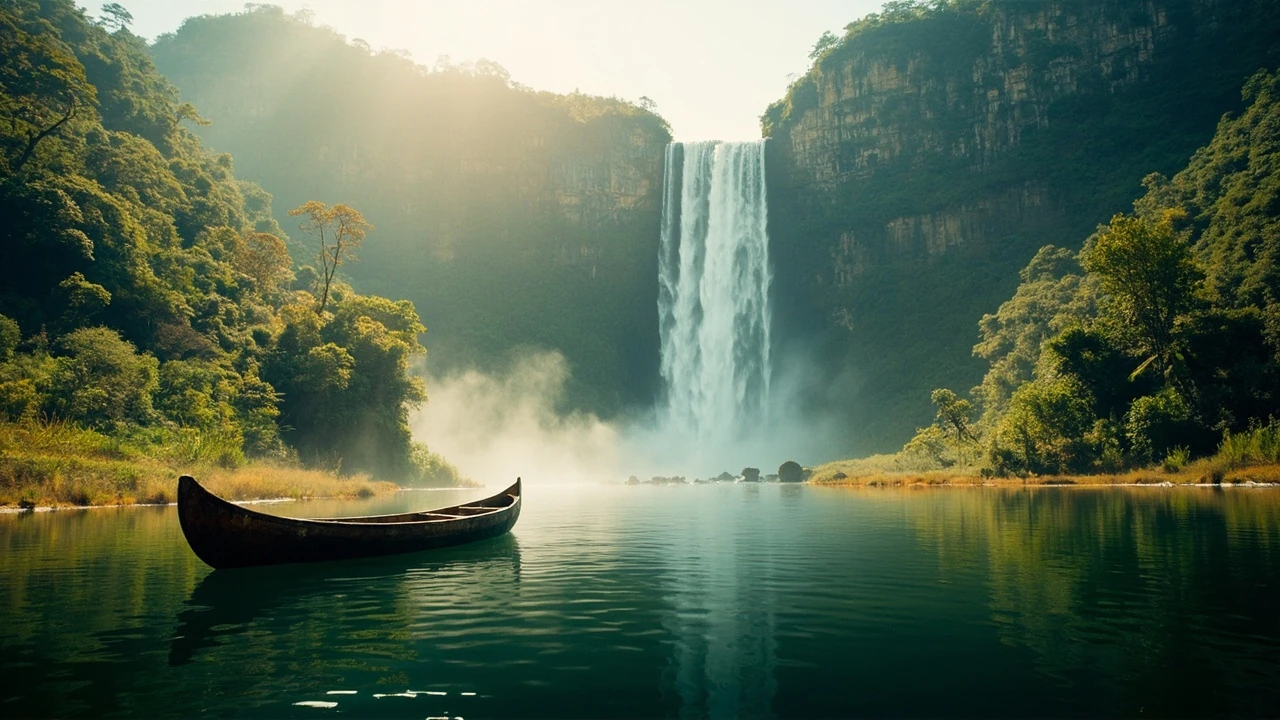
Angel Falls is the destination most travelers recognize by association with Venezuela. The waterfall drops from the sheer face of Auyán-tepui, the tepui famously associated with the fictional mission in Journey to the Center of the Earth. The flight is powerful, but the wider experience of Canaima National Park is equally important. Savanna, forest, river channels, granite formations, and distant tepuis give the journey a scale that photographs alone cannot convey.
Most visitors approach the falls by river and continue by smaller boat to the base. Routes may include stops along the way, and the precise sequence depends on current conditions and the operator’s schedule. Travelers should understand that “Angel Falls tour” can describe different products. A flight provides the most direct view, while a multi-day river journey offers more time in the landscape and a different pace. Ask whether the quotation includes transfers, meals, park-related fees, boats, flight time, and any wait caused by weather.
The practical challenge is remoteness. Mobile service can be inconsistent, cash may matter outside the main settlement, and weather can alter flight or river operations. A local operator with current operational experience is generally more useful than a collection of disconnected bookings. Confirm cancellation terms, communication arrangements for late arrival, and the backup plan if the flight cannot operate. That preparation matters more than squeezing one more landmark into the same day.
How to plan a Canaima visit
- Choose the length that matches your interests. A shorter excursion may emphasize the flight and the principal river route, while a longer journey provides more time for remote scenery and less dependence on a single day’s visibility.
- Ask for a clear inclusions list. Confirm transportation to the airstrip or river terminal, boats, meals, park fees, flight charges, and any overnight accommodation separately.
- Protect your essentials. Keep medication, identification, payment methods, and one change of clothing in carry-on luggage rather than a checked bag that could arrive separately.
- Build in a flexible buffer. Do not schedule a nonrefundable mainland connection immediately after an activity controlled by weather.
- Set realistic communication expectations. Confirm the best route for urgent contact and tell a trusted person which operator and accommodation you are using.
Canaima rewards a slower itinerary. A traveler who spends only a few hours moving between transfers may remember the flight but miss the changing river, forest, and rock formations that make the park distinctive. If weather interrupts the primary activity, a longer stay gives you another opportunity without forcing a rushed replacement plan.
Ask the operator how passengers are grouped, whether the river journey has English-speaking guides, and what happens when someone needs medical assistance. These are not abstract concerns in a remote area. They determine how much flexibility the tour can absorb when clouds, heavy rain, or a late departure changes the day’s sequence.
Los Roques and the Caribbean coast: islands, reefs, and boat-based days
Los Roques is an offshore archipelago rather than a conventional town-centered destination. Most accommodation and visitor services are distributed among islands, with activity shaped by the sea. Boats provide transfers and excursions, and a day may involve snorkeling, diving, fishing, beach time, or visits to sandbars and rocky islets. The appeal is the water, but the transport system is an essential part of the experience.
When comparing Venezuela places involving islands, ask what is included with lodging. Some properties are simple beachfront guesthouses, while others offer more extensive services. Because standards and terminology vary widely, photographs and category labels should not be the only criteria. Request current room descriptions, meal arrangements, boat service, water and power provisions, cancellation terms, and details about the nearest arrival point. Verify these points directly rather than relying on a destination overview.
Morrocoy National Park offers a mainland alternative in Falcon state. Its lagoons, mangrove channels, keys, and shallow coastal waters reward travelers interested in birds, reef habitats, and quiet natural scenery. It also makes sense as part of a northwestern road journey, combining the park with stops such as Coro and the dunes of Médanos. The tradeoff is that road and boat conditions still require experienced local coordination.
Choroní and Playa Grande, on the central Caribbean coast, provide a different perspective from offshore resort imagery. Choroní is known for its fishing-village atmosphere and the road toward the Paria Peninsula, while Playa Grande is a long beach reached through steep coastal terrain. A visit may appeal to travelers who want to slow down and experience the coast rather than live aboard an island itinerary.
The mainland coast can be more demanding than a map suggests. Roads may be narrow, paved in sections, or affected by heavy rain. Drivers may also be adjusting their routes to local traffic and weather. Ask the accommodation or operator about the realistic transfer time, the last practical departure from the airport or town, and whether a backup vehicle is available if the main road closes.
What to compare for a coastal trip
- Location: Consider whether you want an island, a national park base, or a coastal town.
- Transfer method: Confirm whether arrival involves a boat, road transfer, or both.
- Water activities: Ask whether equipment, guide services, and marine fees are included.
- Weather exposure: Marine plans can change with wind, waves, and visibility.
- Payment method: Establish how services are paid and whether an advance deposit is required.
- Connectivity: Do not assume that a cellular signal or reliable internet connection will be available.
Among Venezuela places along the water, the most suitable choice depends on whether you want active boat days, quiet beach lodging, or a route that continues overland. The scenery may be similar on a map, but the daily rhythm and logistical demands are different.
The Andes around Mérida: mountains, cool air, and highland towns
Mérida is the principal base for many travelers exploring the Venezuelan Andes. It sits in a valley surrounded by high mountains, and the city is a practical center for cafés, restaurants, university life, and organized excursions. The surrounding peaks, trails, and rural landscapes offer a different rhythm from the Caribbean. Mornings can be cool, roads climb quickly, and a journey through the highlands may take longer than its distance suggests.
Pico Espejo, reached through the protected mountain area above Mérida, is one of the best-known highland outings. Routes vary, and local guides can help visitors choose an option suited to their fitness and weather conditions. Elevation, cloud cover, and trail conditions matter. A viewpoint or shorter walk may be more satisfying than pushing toward a longer technical route simply because time on the itinerary allows it.
Farther north and west, roads and side trips open toward páramo landscapes, coffee-growing valleys, and other Andean environments. Some areas are reached through winding roads where fuel, vehicle condition, and weather can affect the journey. Travelers should distinguish between destinations that work as day excursions from Mérida and those requiring an overnight stay or a dedicated transfer.
Food is another reason to slow down. Highland towns offer a useful contrast to coastal Venezuela, with local restaurants, markets, and regional ingredients becoming part of the visit. Rather than choosing a mountain itinerary only for a summit photograph, consider how much time you want to spend in town. These Venezuela places reward travelers who leave room for walking, observation, and unplanned meals.
Altitude can affect even travelers who are not climbing. Eating, sleeping, hydration, and physical exertion may feel different at higher elevations. Give yourself the first day to settle into Mérida before beginning a demanding outing. If you have a heart or respiratory condition, discuss the planned activity with a qualified medical professional and ask the guide about altitude, route elevation, and emergency procedures.
Choose your Andean base by trip style
- First-time mountain visitors: Use Mérida as a base for organized excursions and shorter scenic routes.
- Long-distance road travelers: Plan fuel, vehicle checks, weather alternatives, and overnight stops before entering remote sections.
- Hikers: Ask about altitude, trail difficulty, weather, guide experience, and the return plan.
- Food-focused travelers: Combine a moderate walking day with time in local cafés and markets.
- Photographers: Plan around early light and late-day mountain views, while leaving time for clouds and changing conditions.
Road distance alone is a poor measure of an Andean journey. A route that appears short on a map may include steep climbs, hairpin bends, settlements with limited services, and stretches where mobile reception fades. A sensible operator should be able to describe the driving day in practical terms, including estimated travel time, stops, fuel strategy, and the alternative plan for poor weather.
Caracas, El Ávila, and the city side of the landscape
Caracas is often treated as a gateway rather than a destination, yet it deserves serious consideration. The city sits beside steep mountains, and a visit can combine cultural attractions and dining with an excursion into the El Ávila area, also known as Waraira Repano. The spatial relationship between dense city streets and dramatic mountain terrain is one of the capital’s defining characteristics.
A visit to El Ávila can involve transport to the mountain area, viewpoints, short walks, and dining options. The road, funicular, and visitor services have changed over time, so it would be misleading to publish a fixed schedule as permanent information. Confirm the current transport method, operating status, access conditions, and any local requirements directly. If access is limited, the wider Caracas area still provides museums, food, architecture, and urban viewpoints.
City travel requires more attention to daily logistics than a resort stay. Keep valuables discreet, use reputable transport, avoid displaying an itinerary publicly, and plan for changes in payment, connectivity, or movement through busy areas. Consult current official advisories and reliable local guidance before travel. The location of Venezuela places in a capital city does not make urban navigation equivalent to travel in a smaller tourist town.
For travelers interested in Venezuelan history and regional context, the country’s political story can be complicated by fast-moving reporting. For additional context, BBC’s Venezuela topic page is one source for tracking political developments, but it should be considered alongside official travel guidance rather than used to infer conditions in a particular neighborhood or attraction.
Give Caracas enough time to understand the city at street level rather than treating it only as a departure point. Markets, museums, restaurants, and the mountain edge can form a coherent two-day visit. Moving directly from an international arrival to a remote tour removes the opportunity to recover from jet lag and gives you no margin if a flight is delayed or a reservation needs to change.
How to handle entry, money, transport, and safety planning
Travel conditions can change faster than a destination article can be updated. Before committing to Venezuela places, check the entry requirements issued for your nationality and passport, including whether a visa is required and how long a permitted stay may last. Confirm the requirement directly with the responsible embassy or consular service. Also review official health guidance, current travel advisories, and any transit-country rules that apply to your itinerary.
Money deserves a separate plan. Venezuela has experienced substantial currency and pricing changes, and exchange rates, accepted payment methods, and the availability of cash can vary. Do not rely on a rate shown in an old forum post, a screenshot, or a general guide. Ask the lodging or operator how a specific reservation is to be paid, what documentation is needed, and what happens if services are disrupted. Keep a contingency plan for a delayed flight, changed booking, or medical need.
Transport is another major decision. International flights, domestic flights, shared vehicles, rental cars, boats, and local taxis each carry different assumptions. A successful route depends on fewer connections, realistic transfer times, and a backup for disruption. This is especially important in the interior and at coastal or highland destinations where distances look short on a map but roads or weather extend the journey.
Travel insurance should reflect the real route rather than just the country name. Read the definitions of medical evacuation, activity coverage, travel delay, and missed connections. Some policies require activities such as hiking, diving, or boat travel to be declared. Keep the policy number and assistance contact available offline, and ask the insurer what evidence they need if a claim is made.
A pre-departure checklist
- Check the entry and health rules for your passport and route.
- Read the latest official travel advisory and avoid relying on an old travel forum.
- Confirm every major reservation directly, including pickup points and cancellation terms.
- Carry proof of accommodation, onward travel, emergency contacts, and sufficient reserves.
- Keep copies of key documents in a secure digital location and a separate offline location.
- Obtain travel insurance that covers the planned destinations and activities.
- Ask your insurer what documentation it requires and what assistance is available.
- Plan for disrupted connections rather than booking irreplaceable activities on the same day.
- Share the itinerary with someone at home, including local contacts where appropriate.
- Set a communication plan for places with weak cellular or internet coverage.
What to pack
- Lightweight clothing appropriate for the regions and season included in your route.
- A compact rain shell and footwear suited to trails, wet ground, boats, or rough paths.
- Sun protection for open landscapes, beaches, and high-altitude sunlight.
- Any prescription medication, carried in original packaging with appropriate documentation.
- A small first-aid kit with supplies suited to your known allergies and activities.
- Copies of key documents and secure storage for a phone and wallet.
- Cash in a useful form for locations where cards or digital payments cannot be assumed.
- Headlamp, power bank, and small offline map where connectivity may be limited.
Pack for actual conditions rather than a generic list. A city traveler and an island guest need very different bags, while an Andean route needs more attention to layers and footwear. Large suitcases also become inconvenient on boats, rural roads, and short transfer vehicles.
Carry redundant essentials without overpacking. A paper copy of critical reservations and phone numbers can be useful when a service is unavailable, while a waterproof pouch protects documents during boat or rain transfers. If you plan to use a drone, confirm the rules for each location rather than assuming authorization in one region applies to the entire country.
Build itineraries that leave room for change
The best Venezuela places are not always the ones that produce the most ambitious itinerary. A journey built around one geographic region is usually easier to enjoy than a route that crosses the country every few days. Give each destination enough time to move beyond an arrival photograph and understand its setting. For a first visit, a focus on one or two regions is more valuable than a checklist of distant names.
Consider these sample structures, all of which should be adjusted to current access, weather, and personal interests:
- Landscape-focused journey: Combine Caracas with El Ávila, then spend several days around Canaima and Angel Falls.
- Caribbean route: Build time around Morrocoy, Coro, the Médanos dunes, and a carefully planned coastal or island segment.
- Andean route: Use Mérida as a base for mountain excursions and add one or two longer highland drives if conditions permit.
- Island-centered trip: Allow a generous window for Los Roques and avoid placing nonrefundable mainland plans directly around weather-sensitive boat or flight transfers.
The table below turns those structures into more realistic planning decisions. The suggested durations are starting points rather than guarantees, and each route still depends on current transportation and conditions.
| Travel style | Best starting point | Suggested structure | Main planning concern |
|---|---|---|---|
| First scenic visit | Canaima and Angel Falls | Allow several days for the river, rainforest, and flight experience | Weather-dependent flights, remote communications, and cash requirements |
| Short beach holiday | Los Roques | Build the stay around arrival by boat and flexible excursion days | Boat transfers and accommodation details should be confirmed together |
| Nature-focused road trip | Morrocoy and the northwest coast | Combine the park with Coro and Médanos over several days | Road conditions, heat, fuel, and realistic driving times |
| Mountain and hiking trip | Mérida | Use a town base for day hikes and select one longer highland route | Elevation, weather, trail difficulty, and transport to trailheads |
| Culture and food trip | Caracas | Allow time for neighborhoods, museums, restaurants, and El Ávila | Urban transport, payment methods, and changing visitor services |
| Longer multi-region journey | Caracas or another practical arrival point | Route by region with recovery days between major transfers | Domestic flight schedules and missed-connection risks |
| Photography trip | One or two contrasting landscapes | Assign separate weather buffers to flight, boat, and mountain shoots | Visibility, transport flexibility, and backup subjects for poor conditions |
These Venezuela places can also be combined, but the order matters. For example, a first-time visitor might spend several days in Canaima, travel to Caracas, and finish with a coastal segment. Moving between distant regions while tired or after a missed connection is a common reason plans collapse. Build one or two recovery points into longer itineraries.
Plan each day around one anchor activity rather than three minor attractions. A morning flight, an afternoon walk, and an evening boat transfer may sound efficient, but small delays multiply when the next transfer is nonrefundable. Travel at a human pace, keep some choices local, and avoid planning a destination around scenery that may be hidden by clouds or rough seas.
Keep a simple working budget rather than relying on one total. Separate fixed international costs, domestic transport, accommodation, excursions, meals, insurance, and a reserve for price changes or replacement transport. The purpose is not to predict every expense. It is to see whether the planned route still works if one major component costs more than expected or must be booked again.
Ask each local contact the same basic operational questions. Where will you meet, how long should the journey take, what happens in rain, and what payment method is accepted? Consistent answers make it easier to spot a booking that has not been confirmed. One accurate answer may reveal more than several pages of outdated destination descriptions.
Frequently asked questions
What are the best Venezuela places for a first visit?
Angel Falls and Canaima National Park are the strongest choices for a first visit focused on scenery and a distinctive natural experience. Travelers primarily interested in clear water and island days may prefer Los Roques, while those wanting mountains, cafés, and organized hikes can base themselves in Mérida. The best choice also depends on current access and the amount of time available.
Is Los Roques suitable for families?
It can be, but families should consider the transfer method, boat exposure, accommodation style, and the child’s comfort with water activities. Ask the lodging provider what services are actually available rather than assuming a beach property includes the same facilities as a large mainland resort. Calm seas and suitable weather can make island days enjoyable, while a practical, flexible booking is essential.
Do I need a guide to reach Angel Falls?
Using a reputable local operator or guide is the most practical approach for most visitors because the route involves river and air logistics, remote conditions, and weather-dependent operations. The best arrangement should clearly explain what is included, how the group will travel, what happens if visibility is poor, and how emergency communication is handled.
Can I visit the Venezuelan Andes independently?
Independent travel is possible in some areas, but conditions vary considerably. Road status, weather, fuel availability, accommodations, and local transportation can affect every part of a route. Even experienced travelers should verify current conditions locally and avoid relying on a distant itinerary that cannot adapt. A guide or small operator can be especially useful outside established visitor centers.
Which Venezuela places are best for photography?
Canaima and Angel Falls offer dramatic scale, Morrocoy provides lagoons and coastal textures, Médanos de Coro offers open desert forms, and Los Roques is well suited to water photography. Light, weather, and access matter more than the nominal subject. Allow alternative days so a planned shoot is not dependent on one sky or one boat departure.
How much time should I allow for a trip focused on Venezuela?
Allow more time than a typical city break. A focused regional trip may fit within one or two weeks, while a visit to remote destinations can require longer because of flights, transfers, and weather delays. The decisive factor is not simply the number of nights but whether your itinerary allows for disrupted connections and local decisions.
Are Venezuela places safe to visit?
Safety depends on current conditions, location, activities, transportation, and local guidance. Check official advisories for your nationality before departure and again shortly before traveling. Use reputable accommodation and transport, remain alert in unfamiliar surroundings, and ask locally about specific routes. No destination article can replace current official information or careful personal risk assessment.
Should I bring cash or rely on cards?
Do not assume one payment method will work everywhere. Ask each operator and property how it expects payment, and carry a reasonable cash reserve for locations with limited connectivity or card acceptance. Keep it secure, separate from your travel documents. Exchange and payment rules can change, so confirm current arrangements rather than relying on a rate or practice from a previous trip.
Can I combine Angel Falls with the Caribbean coast?
You can, but the interior-to-coast transfer adds another stage to the journey. If conditions permit, this works better as part of a longer itinerary than as a rushed two-region trip. Build in a buffer between the remote inland section and a flight, boat, or road connection to the coast. Current domestic transport availability should be confirmed before booking the two segments.
What should I do if a flight, boat, or road transfer is delayed?
Keep your next provider’s contact information, confirm whether the delay changes the booking, and avoid making unrelated commitments until the onward route is clear. If the delay threatens an international connection, contact the airline and your travel insurer promptly. A flexible route with deliberate spare time is safer than one where every segment is scheduled back-to-back.

Leave a Reply