
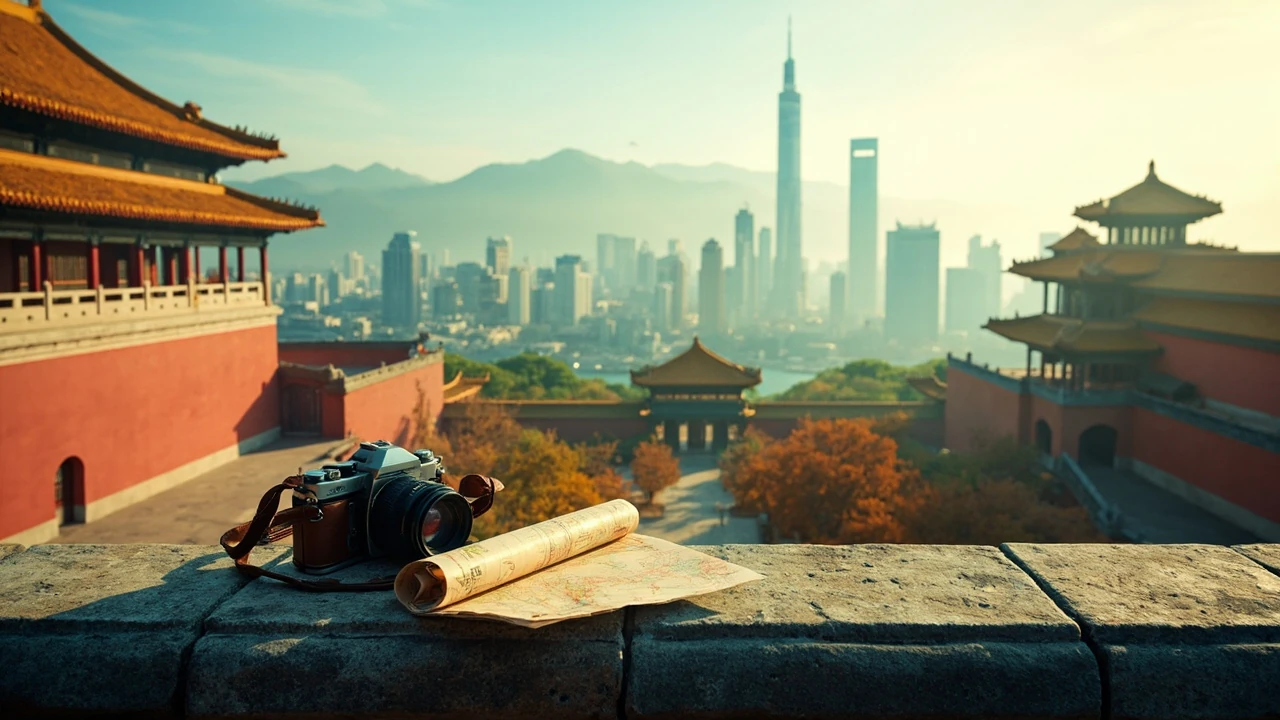
Famous landmarks in China for first-time visitors
A first trip to China can be surprisingly difficult to plan well because the country contains some of the world’s busiest cities, several distinct regions, and historical sites separated by long distances. Visiting the Forbidden City, the Great Wall, the Terracotta Army, and a modern Shanghai skyline sounds simple on a map, but each destination demands travel time, advance planning, and a different pace.
This guide to famous landmarks in China focuses on what a first-time visitor can realistically experience. It compares the strongest sights by location, time required, accessibility, and type of experience, then explains how to combine them into a workable trip. It does not attempt to list every attraction. Instead, it identifies the landmarks that offer the clearest sense of the country’s history, architecture, landscape, and modern life.
Most travelers benefit from choosing two or three regional hubs rather than racing across the country. Beijing offers imperial history and the most accessible sections of the Great Wall. Shanghai combines landmark architecture with a major international city. Xi’an is the logical base for the Terracotta Army, while Chengdu and the southwest open access to mountain scenery, temples, and outdoor attractions. A shorter trip can focus on one region; a longer one can connect two, but each additional flight or overnight train should earn its place in the itinerary.
How to choose the right landmarks for your trip
The best famous landmarks in China are not simply the places with the largest crowds or the most recognizable names. A good choice depends on what you want to understand, how much time you have, and whether you prefer monumental architecture, local street life, mountain scenery, or archaeological history.
| Travel priority | Best landmark areas | Why they fit | Planning consideration |
|---|---|---|---|
| Imperial history | Beijing and Xi’an | Palace complexes, city walls, imperial gardens, and major archaeological sites | Allow at least three full days for Beijing and two for Xi’an |
| Modern urban culture | Shanghai | Historic waterfront architecture, art Deco streets, contemporary neighborhoods, and a dramatic skyline | Use the metro and reserve time for neighborhoods beyond the Bund |
| Great Wall access | Beijing and the surrounding region | Restored visitor sections and less developed mountain sections | Choose the section by condition, access, and tolerance for steep walking |
| Mountain scenery | Zhangjiajie, Huangshan, Guilin, and Jiuzhaigou | Distinct landscapes ranging from sandstone pillars to limestone peaks, valleys, and lakes | Allow extra days because these places are not convenient day trips |
| Religious architecture | Beijing, Chengdu, Leshan, and Tibet | Traditional temple complexes, monumental Buddhist sculpture, and distinctive regional architecture | Check respectful visitor expectations and seasonal accessibility |
| Food and everyday culture | Chengdu, Xi’an, and Shanghai | Distinct regional cuisines, markets, neighborhood restaurants, and social rhythms | Leave unscheduled time for meals and local streets |
A useful decision is to pick two primary experiences and avoid turning every optional stop into an obligation. For example, a traveler who values architecture might pair Beijing’s Forbidden City with Shanghai’s historic waterfront. Someone interested in food could combine Xi’an with Chengdu. If scenery matters more than museums, two bases in mountain regions may be more rewarding than adding another large city.
Before booking, consider these practical factors:
- Trip length: Two or three full days are enough for Beijing’s core sights. Cross-country travel becomes more attractive when a trip lasts at least a week or longer.
- Season: Summer can bring heat, heavy rain, and crowded mountain routes, while northern winter is cold and dry. Regional conditions differ, so check the specific destination rather than treating China as one climate.
- Walking tolerance: The Forbidden City, the Great Wall, temple sites, and mountain paths can involve far more walking than a flat sightseeing district.
- Entry requirements: Major sites may require advance identity-based reservations. Verify the current process through official channels before travel.
- Language support: English-language interpretation is more common at major attractions and museums than at smaller sites. Download offline translation tools and save addresses in Chinese.
- Energy management: Place one major landmark per day rather than filling an itinerary with distant stops. A single well-paced visit is usually better than three rushed photo stops.
Distance also matters more than raw time on a map. A flight between two major cities can take only two hours, but airport procedures, ground transfers, and check-in can make it a full half-day. An overnight train may offer better use of time while adding a schedule change and a night in transit. The right choice is the one that fits your budget and tolerance for travel fatigue.
Beijing landmarks: imperial history and the Great Wall
Beijing is the most logical first stop for anyone interested in China’s imperial past. The city contains enough major sights to fill several days, but the strongest plan balances the Forbidden City and Tiananmen Square with smaller spaces such as the Temple of Heaven, the Summer Palace, and a hutong walk. Add a Great Wall excursion and the city becomes a complete first destination rather than a brief stop between provinces.
The Forbidden City is the essential choice. Built as the imperial palace from the Ming dynasty and used by the Qing dynasty as well, its scale and preserved interiors reveal how Chinese court life was organized through gates, courtyards, ceremonial halls, and carefully controlled routes. Visitors should follow the one-way route rather than trying to circle every structure. Highlights include the major ceremonial halls, the Palace of Heavenly Purity, the Garden of Heavenly Purity, and the smaller residential quarters that reveal the daily routines behind the grand state spaces.
Allow a generous half-day or a full day depending on your interest. The area is enormous, and rushing creates a sequence of courtyards without much sense of place. Morning visits generally offer a more comfortable start, although exact operating arrangements should be confirmed through the official ticketing system before you go.
Temple of Heaven deserves at least two or three hours. Its circular Hall of Prayer for Good Harvests, raised on a tiered stone base, is visually distinctive, but the broader park contains long pedestrian corridors, old trees, and ritual buildings. Coming from the tightly organized Forbidden City, this green space feels noticeably different. The Temple of Heaven also gives useful context for how ceremonial architecture and landscape were combined.
The Great Wall requires a separate day. Badaling is the most straightforward choice for many visitors because it is near Beijing and has established visitor infrastructure. Mutianyu offers a different combination of forest, restored wall, towers, and a slide or cable-car option that can make the visit more accessible. Jinshanling is known for a long ridge walk and numerous watchtowers, while Jiankou has a more demanding climb through orchards and forest.
The For additional context, BBC account of Jiankou’s remote Great Wall section illustrates why the choice matters. The report describes steep, slippery surfaces, limited facilities, difficult access, and restoration work intended to stabilize a fragile section. Jiankou may appeal to experienced hikers, but it should not be treated like a casual side trip from central Beijing.
For context, the recorded history of the Great Wall shows that it is not a single continuous building. Different dynasties constructed, connected, rebuilt, and maintained sections across northern China. A visit to one restored area provides an accessible introduction, but the site is best understood as part of a much larger defensive network.
A three-day Beijing outline keeps the main attractions manageable:
- Day one: Tiananmen Square, the Forbidden City, and an evening walk through the surrounding historic center.
- Day two: Temple of Heaven in the morning, a traditional or regional lunch, then the Summer Palace and its lakeside grounds.
- Day three: A Great Wall section selected around your desired pace, followed by return travel and a relaxed dinner elsewhere in the city.
Add a fourth day if you want the National Museum, a hutong, or more time in local neighborhoods. The historic center is not merely a backdrop to the monumental sights; it shows the city as a living urban environment rather than an open-air museum.
Shanghai landmarks: waterfront history and a modern skyline
Shanghai offers a striking contrast with Beijing. Instead of a capital organized around imperial axes, it developed as a treaty port, commercial center, and modern metropolis. Its best landmarks show several layers of that history at once: European-style buildings along the Bund, long stone lanes in the former international settlements, traditional gardens, and a skyline that continues to change.
The Bund is the essential starting point. The waterfront promenade faces a row of historic buildings associated with banks, trading houses, and institutions from Shanghai’s period as an international port. The architecture is best appreciated on foot, especially in morning light, when the river and towers are less busy. Across the water, Pudong’s high-rise skyline creates one of the city’s most recognizable views.
Do not treat the Bund as the entire Shanghai experience. It is a starting point, not a complete itinerary. Walking north through the former concession area reveals preserved villas, old theaters, galleries, bookshops, restaurants, and residential lanes. South toward the old city, Yu Garden and its surrounding maze of historic streets offer a more intricate environment. The combination of broad river views and narrow local lanes is what makes Shanghai’s landmark geography compelling.
| Shanghai area | Main sights | Best time | Common mistake |
|---|---|---|---|
| The Bund | Historic waterfront buildings, Pudong views | Early morning for a calm walk and clearer architectural details | Starting and ending there without exploring nearby streets |
| Former concession districts | Villas, theaters, galleries, cafés, historic lanes | Late morning through evening | Assuming every impressive façade is open to the public |
| Old City and Yu Garden | Traditional garden, historic streets, local shops | Late afternoon, with extra time for meals | Visiting during peak weekend crowds |
| Major modern complexes | Observation points, museums, performance or exhibition venues | Prebooked time slot | Adding one simply because it appears in every skyline photograph |
Shanghai is also an efficient base for travelers who want a short, flexible itinerary. Two full days can cover the Bund, a concession walking route, the old city, and one modern attraction. Three days allow a day trip to Suzhou, whose classical gardens, canals, and historic streets present a different image of Chinese cultural heritage. Shanghai is also home to major museums and art spaces that can be valuable in poor weather.
When comparing cities, remember that Shanghai’s appeal lies partly in movement. The metro makes long distances manageable, but the most rewarding parts of the city often appear at street level. Leave room for a neighborhood with no single monumental attraction on the map.
Xi’an landmarks and the Terracotta Army
Xi’an is easy to underestimate if it is treated only as a base for the Terracotta Army. The city has served as a capital under several dynasties, and its old city wall, pagoda, museum, Muslim Quarter, and local food culture belong in the itinerary alongside the famous archaeological complex outside the center.
The Terracotta Army is the principal reason many travelers come to Xi’an. Thousands of individually modeled clay soldiers were created for the burial complex of Qin Shi Huang, the first emperor of a unified Chinese empire. Seeing the figures in person changes the subject from a textbook image to an archaeological site with scale, individual details, and ongoing conservation work.
The excavation and museum experience involve more than one building. Most visitors begin with a pit hall, then follow a route that can include additional exhibition areas and a display of restored figures. The displays are arranged chronologically and by excavation context. Read the interpretation panels closely, because details about armor, hairstyles, weapons, and ranks reveal how the army was organized.
Allow most of a day. Transportation takes time, the site is substantial, and the visit can involve walking between halls. Wear shoes with good support, carry water, and avoid treating the site as a brief photo stop in a long Xi’an day. Research can support the experience, but the visual evidence remains the main attraction.
Within Xi’an itself, spend time on the old city wall if you want to understand the city’s scale from above. The wall was built during the Ming period and forms a large enclosure around the historic center. Walking only part of it can be rewarding; the full circuit is a substantial activity rather than a token stop.
The Giant Wild Goose Pagoda and the Small Wild Goose Pagoda reflect the city’s Buddhist history. The Myanmar People: Culture, Food, and Everyday Life article offers a useful reminder that travel becomes richer when architecture is connected with contemporary culture and local routines rather than treated as an isolated monument.
The Muslim Quarter has a distinct food culture and a complicated history that deserves thoughtful framing. It is a good place to explore lane rhythms, markets, and regional snacks, but visitors should treat residents and worshippers as people rather than scenery. The best Xi’an schedule pairs the archaeological highlight with both the enclosed old city and a separate neighborhood outing.
Southwestern landmarks: Chengdu, Leshan, and mountain scenery
Southwest China is where a landmark trip becomes a landscape trip. The Sichuan Basin gives travelers access to giant panda conservation, historic streets, tea houses, and the dramatic mountain areas beyond Chengdu. Farther southwest, Yunnan and neighboring provinces introduce temple towns, limestone formations, terraced hills, and snow peaks. These destinations require more movement than Beijing or Shanghai, but the change of pace can be substantial.
Chengdu is the most convenient base. The Sichuan Research Base of Giant Panda Breeding offers a chance to observe the animals, though viewing conditions and seasonal arrangements should be checked directly with the site. Early visits can be worthwhile for activity and cooler temperatures. The surrounding city has historic lanes, teahouses, and food traditions that provide a more complete picture than a quick stop between excursions.
Leshan, roughly southeast of Chengdu, is home to the Leshan Giant Buddha. The statue is carved into a cliff at the confluence of three rivers and is approached through a network of stairs, platforms, and paths. The climbing itself is demanding, and rain can make surfaces slippery. The nearby modern visitor complex may also involve additional walking or queues, so this should be planned as a focused day rather than added casually to a busy itinerary.
Mount Emei, reached from Chengdu by train or road, combines Buddhist sites with mountain scenery. Travelers commonly stay near the summit to improve the chance of seeing a broad landscape after dark, although visibility depends on weather. Emei is more demanding than a city attraction and requires a measured amount of walking.
For scenery in Yunnan, Dali and the Cangshan mountains offer a quieter base near Erhai Lake. Guilin and the Li River area in Guangxi present a very different karst landscape. Zhangjiajie in Hunan is known for narrow sandstone pillars, elevators, glass walkways, and marked trails. Huangshan in Anhui combines granite peaks, pine trees, stone steps, and historical structures. Jiuzhaigou in Sichuan is associated with forested valleys, lakes, and colorful mineral formations, while its access and seasonal conditions require careful planning.
A simple rule helps prevent overplanning:
- Choose one mountain region for scenery. Zhangjiajie, Huangshan, Jiuzhaigou, Guilin, and Cangshan each deserve time. Moving among them simply to collect photographs often creates a punishing schedule.
- Pair a natural site with a local base. Staying several nights near the landscape gives you flexibility for weather, short walks, and unplanned meals.
- Account for vertical effort. A scenic viewpoint can involve steep stairs, exposed paths, stairs, or long transfers from parking areas and stations.
- Do not assume every viewpoint is accessible by lift. Elevators and cable cars may assist at selected sites, but they do not eliminate the need for walking elsewhere.
- Protect buffer time. Mountain weather can change visibility or trail conditions, so a spare day can be more valuable than another distant attraction.
For travelers who prefer organized multi-stop itineraries, the structure of Tanzania Travel Guide: Safaris, Costs & Entry Rules illustrates how destination hubs, regional routing, and entry planning can work together in a geographically varied country.
Other defining landmarks across China
Beyond Beijing, Shanghai, Xi’an, and the major mountain regions, several landmarks are worth understanding even when they may not fit every itinerary. Their significance lies in distinct histories, religious traditions, and landscapes, and choosing among them should be based on regional routing and personal interests.
| Landmark | Location | What makes it distinctive | Best fit |
|---|---|---|---|
| Potala Palace | Lhasa, Tibet Autonomous Region | A monumental palace complex associated with Tibetan Buddhism and the history of the Dalai Lamas | Travelers with time for a high-altitude regional journey |
| Three Gorges | Yangtze River corridor | Cruising or touring through a dramatic river landscape of cliffs and reservoirs | Travelers seeking scenery and a longer river journey |
| Yellow Mountain | Anhui Province | Granite peaks, pines, narrow stone paths, and traditional mountain pavilions | Hikers who want a concentrated mountain experience |
| Reed Flute Cave | Guilin, Guangxi | Karst formations, underground routes, colored lighting, and local performance traditions | Travelers combining Guilin-area scenery with an indoor attraction |
| Leshan Giant Buddha | Sichuan Province | A colossal Buddha carved into a cliff beside converging rivers | Visitors based in Chengdu or southwestern China |
| Kongtong Mountain | Gansu Province | A sacred mountain landscape with temples, cliffs, and pilgrimage routes | Travelers seeking religious and mountain scenery |
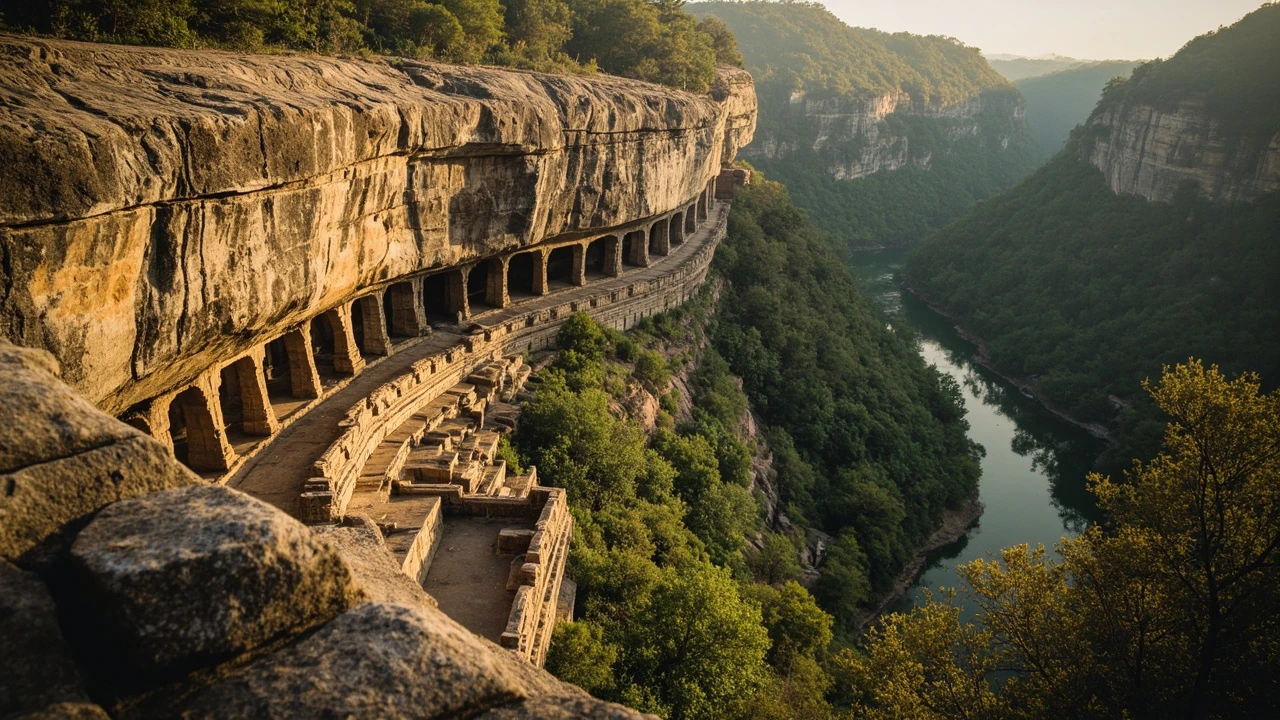
| Hanging Temple | Shanxi Province | A cliffside temple complex supported by a distinctive timber structure | Architecture and history travelers with a northern route |
Tibet requires additional acclimatization planning because of its elevation. A first-time visitor should not treat Lhasa as a normal low-altitude stop squeezed between two flights. Allow time to adjust, choose suitable activities carefully, and follow current health guidance. The Potala Palace also requires advance planning for entry, and respectful behavior matters throughout the region.
The Three Gorges experience can be reached through river cruises or land-based touring, but these are different products. A cruise concentrates the landscape into a multi-day journey with limited daily transfers. A land tour offers more chances to visit settlements and side attractions but involves repeated packing and hotel changes. For a short trip, a single scenic river segment may offer more value than trying to cover the entire route.
Northern religious sites such as the Hanging Temple and Kongtong Mountain can fit into a broader route through Shanxi or northwestern China. The Hanging Temple is especially distinctive for the way its halls appear anchored to the cliff face, while Kongtong Mountain combines religious sites with steep natural terrain. Neither should be treated as an effortless stop simply because photographs do not show the stairs around them.
How to build a practical route and prepare for the visit
A successful itinerary balances iconic landmarks with time for transit, meals, language barriers, and changing weather. The strongest routes use regional hubs rather than crisscrossing the country. Beijing and Xi’an can work as a northern pairing, although they require a flight or long train journey. Shanghai can stand alone or pair with nearby Suzhou. Chengdu works well as a base for Sichuan, while Kunming or Dali can anchor a slower Yunnan itinerary.
For a two-week trip, one workable northern sequence is Beijing, Xi’an, and Shanghai, with an overnight or domestic flight between them. This provides imperial history, archaeological history, a major modern city, and the Great Wall without adding a remote mountain region. For a trip centered on landscapes, replace one large city with two nights in Zhangjiajie, Huangshan, or another mountain region. For a shorter journey, choose one city and avoid sacrificing every major sight for a rushed nationwide overview.
Transportation choice depends on priorities:
- Domestic flights: Best for covering long distances, but compare total journey time with transfers and allow a generous arrival buffer.
- High-speed rail: Often useful between major cities and occasionally more comfortable than flying, especially when stations are close to central transport networks.
- Regular trains: May offer lower prices or overnight travel, but schedules and station locations require careful checking.
- Local transit and taxis: Best for short city transfers. Metro systems can cover major districts in large cities, while smaller destinations may require a taxi, ride-hailing service, or tour transfer.
- Organized tours: Helpful for complicated sites or remote areas, but confirm what is included, how much time is genuinely at the attraction, and whether the schedule is realistic.
Prepare documents and digital tools before departure. Save passport details, accommodation addresses, and confirmation numbers in both English and Chinese. Download offline maps and translation resources because some places may have inconsistent connectivity. Keep a small emergency reserve for transportation changes, but do not rely on unverified street tickets for sites that use reservation systems.
Health and packing needs depend on region and season. Northern winters require warm layers, while southern summer conditions call for breathable clothing and rain protection. Mountain routes benefit from sturdy footwear, but footwear should be broken in before the trip. Carry any regular medication in original packaging and check current rules for bringing it into China. Visitors should also verify current entry, visa, and public-health requirements with official government and embassy resources before departure.
At religious and archaeological sites, follow posted rules. Keep voices low in worship spaces, avoid blocking worshippers for photographs, and never touch artifacts or climb restricted surfaces. At the Great Wall and mountain paths, wear real footwear, stay on marked routes, and turn back when conditions become unsafe. Visitor numbers and local operating arrangements can change, so confirm entry procedures directly with official sites rather than relying on old guidebooks or unsourced social posts.
Frequently asked questions
What are the most famous landmarks in China for a first trip?
For most first-time travelers, the Forbidden City in Beijing, the Great Wall near Beijing, the Terracotta Army in Xi’an, the Bund in Shanghai, and a major mountain site are the strongest candidates. The first four concentrate history and architecture, while a mountain site adds landscape. Trying to fit all of them into a week is usually too ambitious unless the traveler accepts a fast pace.
Which city has the best famous landmarks in China for a short trip?
Beijing offers the strongest combination of major sights for a first visit. It provides the Forbidden City, Temple of Heaven, the Great Wall, major museums, and extensive historic neighborhoods. Shanghai is better for architecture, food, and a modern metropolis. Xi’an is more specialized but rewarding when the Terracotta Army and the old city are central to the trip.
How many days should I allow for the Great Wall?
Allow one full day for a wall visit from Beijing. Travel to the starting area, climbing, sightseeing, and returning can consume most of the day, even when a cable car or slide is available. Restored sections are generally more predictable, while wild or remote routes demand greater hiking ability and preparation. Choose one section rather than attempting several in a day.
Is Shanghai worth visiting if I have already seen Beijing?
Yes. Shanghai presents a different historical and urban story. The Bund and its historic architecture reveal the city’s role as an international trading center, while the former concession districts, old city, museums, and contemporary neighborhoods show how the metropolis developed. Beijing emphasizes imperial institutions and court history; Shanghai is better for urban design, commerce, architecture, and food.
Should I visit the Terracotta Army from Xi’an or on a day trip from another city?
Staying in Xi’an is usually the most practical choice. It reduces the risk of delays and makes it easier to visit the complex with enough time for the pit halls, exhibition areas, and restored figures. A day trip from another city may be possible, but it adds a substantial round journey and can turn the visit into a rushed tour rather than an archaeological experience.
Which Chinese landmarks are best for travelers who cannot walk long distances?
Shanghai’s waterfront, museum districts, some urban parks, and selected major buildings offer more accessible options than mountain paths or the Great Wall. Elevators and cable cars can help at certain Great Wall sections, but steep stairs and uneven surfaces may still be present. At every site, confirm current step-free access and mobility arrangements through official visitor information before booking.
What is the best time of year to visit China’s famous landmarks?
The answer depends on the region. Northern cities generally have cold, dry winters and hot summers, while southern and mountainous areas can have heavy rain during the summer monsoon. Spring and autumn often offer comfortable conditions in many regions, although visitor demand can also be high. Check regional weather patterns for the exact cities and mountain areas on your itinerary rather than applying one nationwide rule.
Do I need to book tickets for major Chinese attractions in advance?
Advance booking is advisable for many major attractions, and some sites use reservation systems tied to passport or identity details. Rules can vary by location, visitor category, and operating period, so verify current requirements on the official site shortly before travel. Keep both the order confirmation and the identity information used for the booking accessible on your phone.
Can I visit several of China’s famous landmarks in one trip?
You can visit several regional highlights, but each major transfer consumes time and can create fatigue. A two-week itinerary can comfortably pair two or three well-chosen regions; a shorter trip is best limited to one major city and a nearby excursion. A memorable route is usually more valuable than a long list of places seen only through a bus window.



Leave a Reply