
ajanta caves: a practical guide for first-time visitors
The most useful way to approach Ajanta is as a focused cultural trip rather than a long checklist of sights. The caves form one of India’s most important concentrations of ancient Buddhist art, yet a visit can feel confusing if you arrive without a plan for the rock-cut chambers, their chronology, and the long journey from the nearest major transport hub. This guide focuses on the Ajanta Caves in Maharashtra, the archaeological site reached from Chhatrapati Sambhajinagar, formerly called Aurangabad. It explains what first-time visitors can reasonably see, how to organize the day, which details deserve advance confirmation, and where the experience can disappoint if expectations are not calibrated.
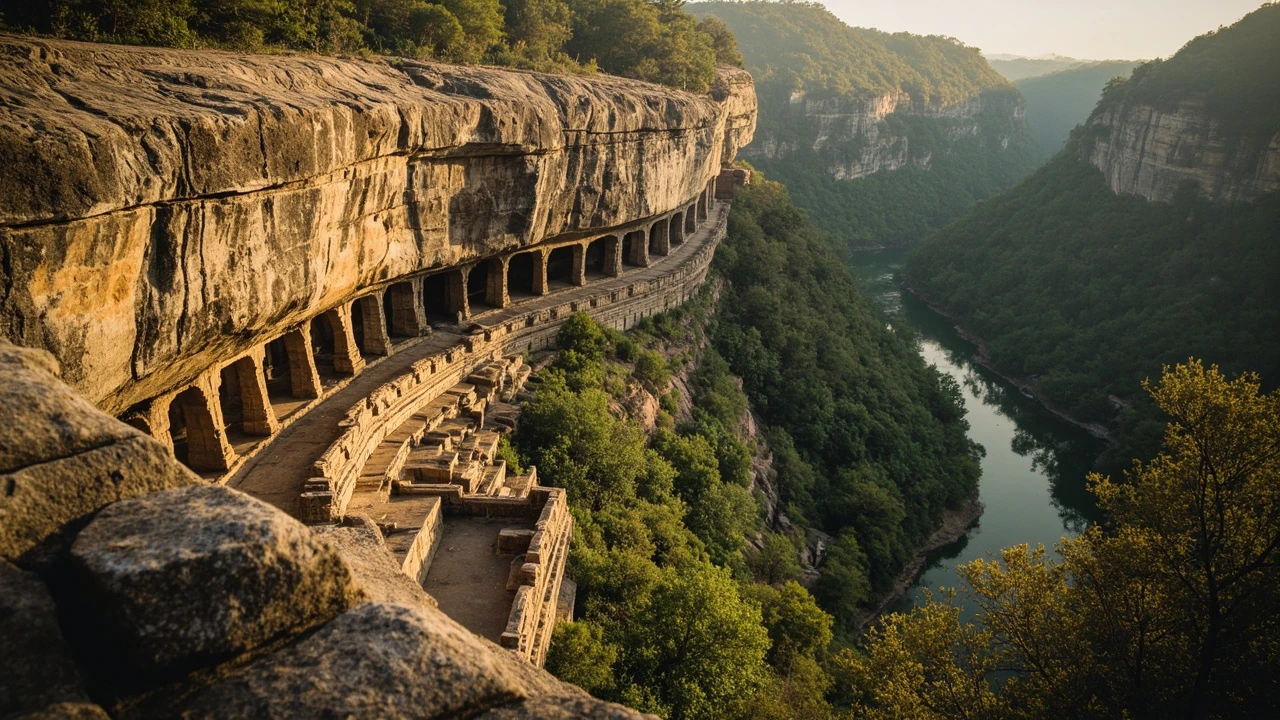
Ajanta is not a single monumental doorway that can be understood in a few minutes. The site is a group of caves cut into a horseshoe-shaped escarpment above the Waghora River. You move between temples, monasteries, painted chambers, stairways, verandas, courtyards, and rock-cut columns, often walking uphill between entrances. The scale becomes clearer when you recognize that the rock face itself was the starting material: the excavators shaped it inward, opened entrances, carved structural supports, and created rooms whose proportions depend on the geology around them.
Plan the trip around three questions: How much time do you want for the caves? How much time can you reserve for travel to and from the site? And how experienced do you want your guide to be? Those choices affect everything from the vehicle you book to the number of chambers you can inspect without rushing. For most first-time visitors, a full day from Chhatrapati Sambhajinagar is the most practical shape, although a longer stay makes the pace less compressed.
What makes the Ajanta Caves worth the travel
Ajanta rewards attention to sculpture, painting, architecture, and religious history at the same time. The caves were created over several centuries, beginning around the second century BCE and continuing into the fifth century CE. This long development means that the site does not represent one moment or one consistent style. Earlier chambers emphasize Buddha images and simple sacred forms, while later work introduces a more complex visual language, including richly ornamented ceilings, narrative scenes, celestial figures, and imagery associated with later Buddhist traditions.
The strongest reason to visit is the chance to see these works in their original rock-cut setting. Reproductions in books and museums are valuable, but they flatten scale, depth, surface, and architectural relationships. Inside a chaitya hall, for example, the carved stupa, surrounding columns, railing, ceiling patterns, and image of the seated Buddha work together as an interior. The experience depends on light, proportion, and the visitor’s movement through a confined, carefully shaped space.
The cave exteriors offer a different form of appeal. Some façades retain traces of plaster and paint, while others are weathered. The contrast between carved surfaces and raw cliff makes it easier to understand how the complex developed. You can move from an exterior veranda into a painted chamber and then return to an open view of the valley, with each part clarifying the relationship between the caves and the landscape.
| Feature | What it offers | Best way to approach it |
|---|---|---|
| Rock-cut architecture | Monasteries, chaitya halls, columns, stairways, verandas, and carved façades | Allow time to notice how the chambers were formed from the living rock |
| Buddhist sculpture | Images of the Buddha, bodhisattvas, attendants, teachers, and narrative figures | Use a guide to connect individual images with Buddhist stories and symbols |
| Wall paintings | Religious scenes, decorative borders, figures, and evidence of long-term plaster and pigment work | Ask about conservation conditions before viewing details closely |
| Landscape | A dramatic ravine, river valley, wooded slopes, and changing seasonal colors | Combine the caves with an unhurried stop at a viewpoint or riverside location |
Ajanta is also valuable as a counterpoint to crowded urban itineraries. The site requires travel and has physical demands, but it does not ask you to move between unrelated monuments or commercial stops. A well-planned visit can provide a more absorbing experience than adding several loosely connected attractions to a busy schedule.
That value depends on the site remaining a functioning heritage destination rather than a backdrop for a rushed photo stop. Conservation, controlled access, and visitor management can affect which caves are open on a given day. Check the current official information before departure rather than assuming that every cave shown in a map is accessible throughout the year.
How to understand the caves without trying to see everything at once
The caves are conventionally discussed by number, but the numbering is easiest to use when combined with an understanding of the different chamber types. A chaitya is a prayer hall with a carved stupa and a colonnaded interior. A vihara is a monastic residence, generally organized around a central hall with cells for monks. The site includes both types, and several caves combine a sanctuary with subsidiary spaces.
Visitors who try to walk through all the caves in numerical order can lose the larger story. A more effective approach is to select representative spaces and study them carefully. For a first visit, prioritize the most important art, the strongest examples of architecture, and the cave that best illustrates the site’s development. You can then return to earlier numbering or continue to later caves if energy and time permit.
- Cave 1: Begin with an early monastery that helps establish the scale and daily religious function of a vihara.
- Cave 2: Look for the relationship between carved sculpture, architectural details, and surviving painted surfaces.
- Cave 6: Notice an early chaitya hall and compare its visual restraint with later worship spaces.
- Cave 10: Examine paintings and decorative programs while keeping in mind the conservation constraints that shape how the chamber can be viewed.
- Cave 19: See how a substantial monastery is arranged around its central hall and surrounding cells.
- Cave 26: Allow extra time for the most celebrated chaitya interior, including its stupa, columns, seated Buddha image, railing, and ornate ceiling.
- Cave 29: Compare another chaitya with earlier examples and consider the site’s development toward its final phase.
Numbering helps, but you should also watch for visual and technical differences. Some façades preserve more plaster or color than others. Some columns are faceted, ribbed, or ornamented in ways that reflect changing architectural preferences. Paintings may appear faint from a distance but reveal complex outlines, jewelry, gestures, and patterned borders when examined carefully under permitted viewing conditions.
A good guide should explain more than dates. Ask how an image is positioned in the room, who is likely to have commissioned the work, how the cave was excavated, and why later caves can feel more visually complex. Questions about conservation are also useful. Some surfaces are vulnerable because of the mineral content of the rock, earlier restoration, visitor exposure, or the difficulty of maintaining suitable conditions inside carved chambers.
Do not treat visible wear as a sign that the original work was insignificant. The absence of a painted surface can itself reveal the chronology and condition of the cave. The goal is not to imagine a flawless reconstruction at every opening; it is to read the surviving evidence accurately.
Planning the route from Chhatrapati Sambhajinagar
Chhatrapati Sambhajinagar is the usual base for a day visit to Ajanta. The road journey covers roughly 100 to 110 kilometers and commonly takes about three to four hours, depending on traffic, road conditions, stops, and the exact point of departure. Treat that range as a planning estimate rather than a guaranteed schedule. A flight arrival or long-distance train arrival late in the day is not an ideal basis for reaching the caves the same evening.
Most practical itineraries include one night in Chhatrapati Sambhajinagar before the Ajanta visit. This gives you time to recover from international travel, confirm the current status of the caves, arrange transportation, and avoid missing an early departure because of a delayed flight. If your schedule is already compressed, staying the night before the caves is usually a better use of time than trying to continue to another major destination immediately afterward.
- Choose the gateway that matches your itinerary. Compare flight and train arrivals in Chhatrapati Sambhajinagar with onward travel from Pune or Mumbai, but account for transfer time and traffic.
- Reserve the day before Ajanta for the cave visit. Do not schedule a late flight or demanding excursion on the same day unless your operator provides a realistic buffer.
- Arrange a private vehicle or join a reputable local excursion. The return journey requires a firm pickup plan, especially outside the busiest visitor periods.
- Confirm what the package includes. Check whether the price covers the vehicle, driver, waiting time, entry arrangements, guide services, parking, and any intermediary fees.
- Keep a backup plan for delays. Carry water, essential medication, offline contact details, and a reasonable amount of cash while keeping digital payment options available.
Transportation arrangements can change, so ask the operator for the collection location and expected return time in writing. Clarify whether you will be dropped at the main road, a bus stand, a parking area, or directly at the cave entrance. Small differences in the final transfer can become important for families, travelers with limited mobility, or visitors carrying equipment.
It also helps to understand how different kinds of travel guides organize information. For a broader model of combining transport, costs, and entry planning in a destination where distances are substantial, the Tanzania travel guide illustrates how route details and logistics deserve equal attention with the attractions themselves. The principle transfers well even though the geography is completely different.
If you want cultural context beyond the site itself, a guide to Myanmar people, culture, food, and everyday life can serve as a reminder that Buddhist visual culture belongs to living communities rather than existing only as an archaeological subject. Comparing such a resource with Ajanta should be done sensitively and without assuming that one country or one region represents all Buddhist traditions.
When to visit and how long to allow
Search results for “Ajanta” can also bring up several unrelated places and names, including a nearby village and an Indian passenger train. A For additional context, disambiguation list of similarly named places and entities can clarify those distinctions. The visitor attraction discussed here is the archaeological cave complex in Maharashtra.
The most comfortable travel period for much of northern Maharashtra is generally during the cooler, drier months from October through March. This is a planning tendency, not a guarantee of ideal weather or uninterrupted access. Winter mornings can be chilly, daytime conditions can be pleasant, and visibility may be strong. Later in the year, heat becomes a significant factor. During the monsoon, the landscape can be exceptionally green, but heavy rain may affect access, transport, visitor operations, or the ability to move comfortably between cave entrances.
| Period | Planning considerations | Best use of the visit |
|---|---|---|
| October to March | Cooler conditions are broadly favorable for walking, but popular dates and weekends can increase traffic | Start early, allow generous driving time, and avoid packing the final cave hour too tightly |
| April to May | Heat can be intense, especially during exposed parts of the approach and climb | Begin very early, carry water, reduce midday walking where possible, and prioritize the most important chambers |
| Monsoon season | Rain can affect roads, local transport, paths, and site access; access rules may change | Use current official guidance and maintain flexibility in the itinerary |
Two to three hours is enough for a quick visit, but it is not enough to understand the caves properly. Four to five hours on site provides a better balance between key chambers, a guide, and pauses for the walk between entrances. Some visitors spend nearly a full day there, especially when they want to revisit earlier caves or examine paintings with detailed commentary. The longer journey to Ajanta is worth respecting: rushing a world-class archaeological site undermines the reason for making the trip.
Wear footwear with good grip. The approach includes slopes, steps, uneven surfaces, and exposed sections where weather can make stone slippery. A hat and sunscreen are more useful than an umbrella during the warmer months, since carrying an umbrella among crowded cave entries can be inconvenient. A lightweight outer layer is sensible in winter because shaded interiors and air-conditioned vehicles can feel quite different from the exposed path.
Photography rules can vary by area and over time. Some spaces permit personal photography, while others may restrict flash, tripods, selfie sticks, or access to painted and fragile surfaces. Follow current instructions on site and do not assume that the rules for one cave apply to every chamber. Conservation-sensitive areas deserve the stricter treatment.
Getting around the site and managing the climb
The basic movement pattern is straightforward but physically meaningful: visitors usually reach the cave area by road or local transport, then climb toward the entrances along a winding path. The caves occupy more than one level. You may walk upward to reach the most important groups and then descend toward the exit, depending on the route your guide uses. This is why a comfortable pair of shoes matters more than carrying the lightest possible bag.
Ask how much walking is involved and whether your transport reaches the upper or lower part of the complex. If you have limited mobility, a knee injury, respiratory concerns, or difficulty with prolonged heat exposure, discuss the route before booking. Accessibility conditions and available assistance should be checked against current site arrangements rather than inferred from photographs.
- Carry only what you need for the climb: a small water bottle, sun protection, a light layer, medication, and a modest day bag.
- Use a guided visit for your first trip if you want historical context, especially when paintings are a major focus.
- Do not arrange an unverified onward departure before you know when the guided portion and vehicle return are expected to finish.
- Bring a charged phone and keep emergency and operator contacts available offline.
- Ask about drinking-water availability rather than assuming every fountain or shop is open when you arrive.
Food and drink are generally less convenient inside the cave complex than at a major urban travel hub. Eating a proper meal in Chhatrapati Sambhajinagar before departure is sensible. Carry a light snack if your schedule needs one, but follow rules against eating in heritage areas. Dispose of packaging responsibly and avoid adding litter to a site valued partly for its preserved environment.
Keep the day flexible enough to absorb a delayed vehicle, a longer explanation at a key cave, or a change in access. Heritage travel should be paced around the conservation and archaeology, not around a flight or train connection that has little margin for error.
Visitor etiquette and conservation awareness
The rules at Ajanta are practical expressions of respect for an archaeological site. Stay on designated paths, avoid touching carved surfaces, and do not lean against columns, walls, railings, or sculpture. Even a light hand or bag can cause abrasion, and touching can transfer oils or moisture. Do not scratch, draw, carve, or add stickers to the rock.
Voice levels should remain low inside chambers. The acoustics of carved halls can carry sound farther than visitors expect, and a crowded cave experience becomes less pleasant when every group speaks at once. Use the photography and lighting rules posted at each entrance. If a chamber prohibits flash or photography, comply without negotiating or attempting to work around the restriction.
Remain mindful of worshippers and site staff. Ajanta is a heritage destination and a sacred setting within a living Buddhist tradition. Dress should be comfortable and respectful, particularly if you participate in any religious activity at the site or nearby. Avoid posing in a way that damages the artwork or blocks other visitors.
| Do | Do not |
|---|---|
| Follow posted photography and access instructions | Assume that every chamber has the same photography policy |
| Use guides and official site information | Trust unsourced social posts about current opening hours or access |
| Keep bags small and remain on marked routes | Touch sculptures, painted walls, or carved railings for a photograph |
| Dispose of waste responsibly and keep voices low | Bring food into restricted heritage spaces or leave packaging behind |
| Allow time for conservation-related closures | Pressure guides or staff to bypass a restriction for a better schedule |
Conservation is not separate from the visitor experience. The muted appearance of some paintings may reflect the need to protect vulnerable surfaces rather than a lack of artistic detail. Similarly, barriers and controlled movement can improve the condition of the site while limiting how freely you explore. Visitors who understand those compromises usually have a more thoughtful and rewarding visit.
Combining Ajanta with a wider Maharashtra itinerary
Ajanta works best as the centerpiece of a short regional journey rather than as a hurried side trip. Chhatrapati Sambhajinagar provides the most straightforward base, but the wider region includes other heritage and cultural destinations that can support a longer itinerary. A second night in the city can reduce pressure on the cave day and allow time for a museum, local meal, or short orientation walk.
When constructing an itinerary, allow the Ajanta road journey to remain a full-day commitment. If you add another major attraction on the same day, choose one with a predictable duration near your base and verify transportation before committing. Flexible activities are safer than a chain of fixed appointments when road delays are possible.
- One-day culture stop: Use Chhatrapati Sambhajinagar as the base, devote a full day to Ajanta, and keep the evening free for dinner and rest.
- Two-day regional plan: Visit Ajanta on the second day and use the first day for a quieter city-based cultural or museum experience.
- Extended journey: Compare onward travel toward Pune or other regional connections, but avoid scheduling a tight same-day departure after the caves.
Before booking any addition, compare its value with the risk of losing time at Ajanta. A traveler who wants art and archaeology usually gains more from a second careful visit to the caves than from adding a distant stop with a rushed schedule. Travelers with limited time may prefer one well-guided visit and a comfortable evening in the gateway city.
Confirm the following items before payment or departure:
- Current access status and any cave-specific closures
- Official opening arrangements and the last suitable entry time
- Current entry procedures, ticket availability, and any visitor identification requirements
- Whether a licensed or otherwise appropriate local guide is required or recommended
- The exact pickup point, vehicle type, waiting allowance, and return time
- Accessibility needs, walking distances, and available assistance
- Your nationality’s current visa and entry requirements for India
- Travel insurance coverage for delays, health needs, and missed connections
Those checks turn Ajanta from a headline on a map into a managed travel experience. Current rules and operating details can change, so confirm them through official heritage channels or a reputable local operator close to the date of travel.
Frequently asked questions
How many hours should I spend at the Ajanta Caves?
Allow four to five hours for a meaningful first visit. That gives you time to see the major chaitya and monastery spaces, follow a guide, pause over paintings and sculpture, and account for walking between entrances. A shorter visit is possible, but attempting to cover every cave usually produces a rushed experience.
How do I get from Aurangabad to the Ajanta Caves?
Chhatrapati Sambhajinagar, formerly known as Aurangabad, is the usual gateway. A road journey covers approximately 100 to 110 kilometers and often takes three to four hours, depending on traffic and other conditions. Travelers commonly arrange a private vehicle or book a local excursion that includes the return transfer. Confirm the pickup point and return time in advance.
What is the best time of day to visit Ajanta?
An early start is usually best. You can travel before the day’s heat and traffic build, reach the caves with more energy, and have a longer period available before an afternoon return journey. In winter, bring a warm layer for the cool morning. The ideal starting time should still reflect current operating arrangements and your origin in Chhatrapati Sambhajinagar.
Are the Ajanta Caves open during the monsoon?
Monsoon conditions can affect access because of heavy rain, road conditions, visitor management, and conservation work. Do not rely on a general travel-season statement when making a booking. Check the current official site information and your operator shortly before travel, and keep the itinerary flexible if weather may be a factor.
Can I visit Ajanta in one day from Chhatrapati Sambhajinagar?
Yes, many travelers use the city as a one-day base, but they should reserve the entire day rather than treating it as a short excursion. The driving time, time on site, breaks, and return journey can fill a full schedule. Staying a night before the visit reduces the risk of a delayed arrival affecting the experience.
Which caves are most important for a first visit?
Caves 1, 2, 6, 10, 19, 26, and 29 offer a useful introduction to different architectural forms and phases of the site. Cave 26 is especially important for its chaitya interior and seated Buddha image, while Cave 1 introduces the monastic form. A guide can help you adjust this shortlist according to current access, your interests, and the time available.
Is photography allowed inside the Ajanta Caves?
Photography policies can vary by chamber and may change as conservation requirements evolve. Some areas may permit personal photography, while others can restrict flash, tripods, lighting equipment, or all photography. Ask at the entrance, read posted instructions, and never assume that a rule seen in one cave applies to the next.
Do I need a guide at the Ajanta Caves?
A knowledgeable guide is highly useful, particularly for interpreting the paintings, sculpture, chronology, and religious symbols. It also helps with route planning and conservation-aware behavior. Confirm current requirements and choose a reputable local service. If you visit independently, study a reliable site map and historical overview beforehand.
How physically demanding is a visit to Ajanta?
The visit involves walking on slopes and steps between cave levels, and the approach may include uneven surfaces. Wear footwear with good grip, carry little more than necessary, and avoid the hottest part of the day when practical. Anyone with mobility or respiratory concerns should ask the operator about route conditions and available assistance before booking.
What should I bring to the Ajanta Caves?
Bring secure footwear, water, sun protection, a light layer for cooler conditions, necessary medication, and a small day bag. Keep identification and payment methods ready, and download the operator’s contact details for offline access. Avoid large bags, unnecessary electronics, and anything that could obstruct other visitors in narrow chambers.


Leave a Reply